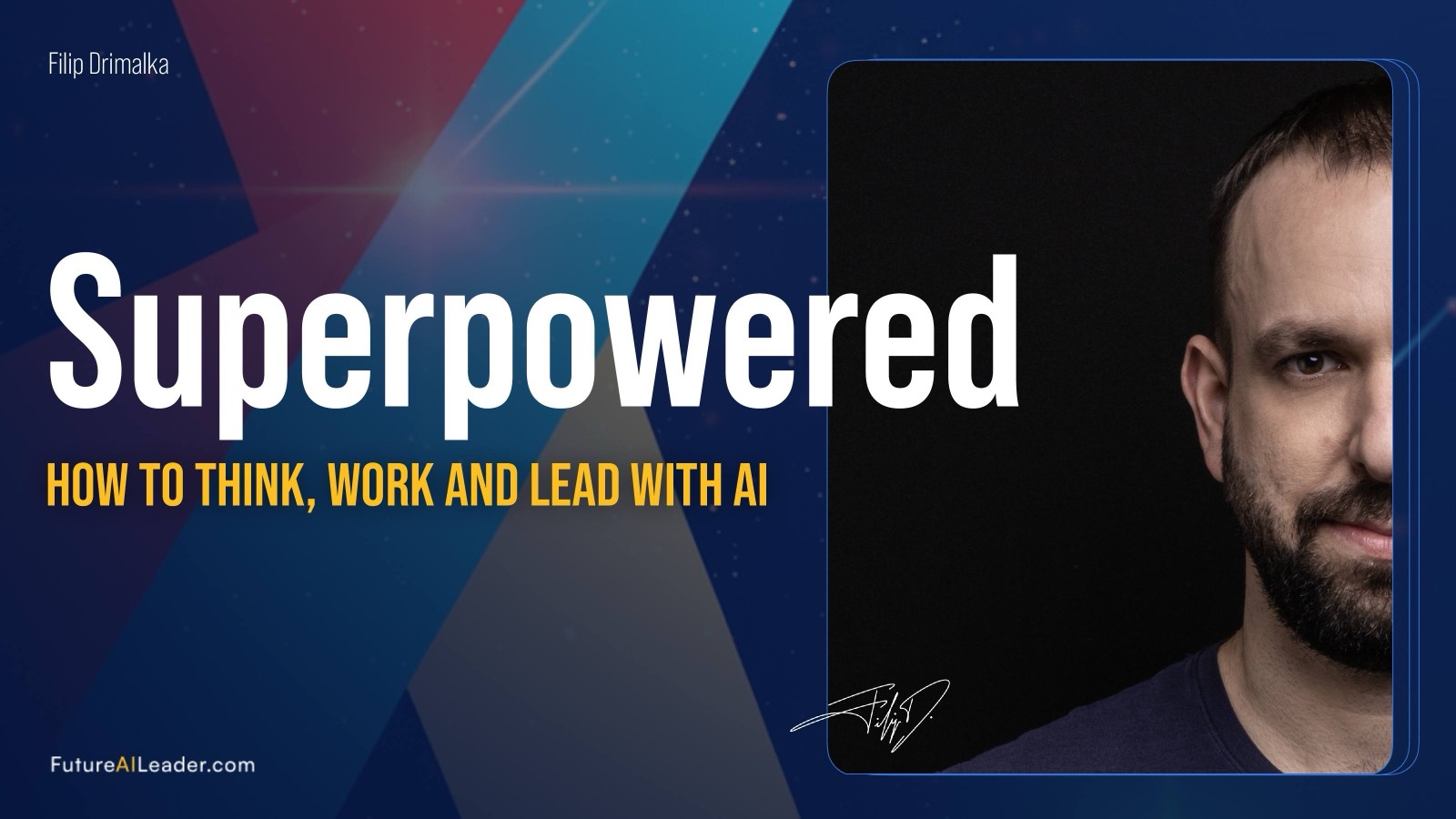
For ten years I've closed the gap between what AI can do and what people know how to do with it — a bestselling book, a high-ticket AI leadership program ~2,000 professionals have taken, and hyper-personalized learning products I ship myself. This role is the thing I already do, at the scale I've been chasing alone.
"The most exciting version of this role encodes its own craft into AI-powered systems rather than guarding it."
From the job description. To me that's not an aspiration — it's a description of how I already work. I don't guard the craft; I encode it, and I move the human-vs-AI line every time the models improve. The full "Why Anthropic" letter closes this page.
Seven asks from the role, seven things you can check. Four more inside.
PACT — Projects, Agents, Context, Tools — is the AI operating system I designed, named, and run every day. Not just content: email, finance, client reports, video production, the whole operation. Most candidates talk about "using AI." I run it as infrastructure — and I bet my own money on it. All numbers below are live counts from the actual workspace.
What I'm doing — 29 active areas, 200+ projects: books, client programs, products, events, finance.
How it gets done — 131 agents + 20 skills that draft, review, personalize, produce and ship.
What I know — 32 knowledge areas: identity, voice, expertise, 240+ transcripts of meetings and talks, 4,895 archived AI sessions.
What it runs on — 31 tool suites: scrapers, transcription, integrations, LLM pipelines.
I drop in the raw podcast recordings. The agents then produce, from three camera sources:
What used to need an editor for a week is now one review pass. That's the pattern across all the agents: the craft is in the instructions, not trapped in my head.
The role wants someone who can decide "where and how AI accelerates drafting, review and maintenance, and where human craft is non-negotiable — and move that line as models improve." I've been tuning exactly that line for two years, in production, across a real content operation. It's the muscle this job is built around.
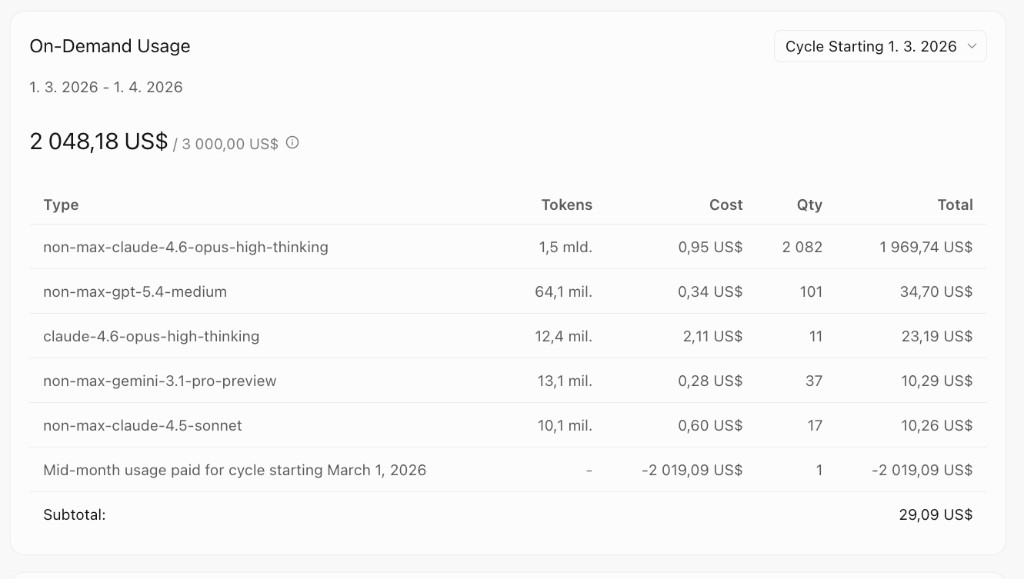
of my usage-based AI spend
goes to Claude — $11,927 of $12,289 in seven months, from my own pocket, on top of Claude Max, Cursor and ChatGPT Pro subscriptions. This is not a brand affinity added for the application. It's where my systems already run.
I deliberately work across three coding harnesses — Claude Code, Codex and Cursor — because I want to see how each harness shapes the work, how the models behave inside them, and how they play together. But the models I run most, by a wide margin, are Anthropic's.
| Month (2026) | Total AI spend | Claude share |
|---|---|---|
| January | $1,126.05 | 96.5% |
| February | $1,183.97 | 97.9% |
| March | $3,548.18 | 98.7% |
| April | $2,461.67 | 92.9% |
| May | $2,483.54 | 97.4% |
| June | $779.49 | 99.7% |
| July | $706.45 | 98.2% |
| Total | $12,289.35 | 97.1% |
Cursor on-demand usage + direct Anthropic API credit purchases, combined. Subscriptions (Claude Max · Cursor · ChatGPT Pro) on top. Model usage tracks the frontier in real time — Opus 4.5 → 4.6 → 4.7 → 4.8, then Fable 5 and Sonnet 5 as they shipped.

A learning platform, a national AI event, and a survey that wrote 1,166 personal reports — all built in natural language.
The adaptive learning platform behind my Future AI Leader program (section 03) — built by me in Next.js + Neon.
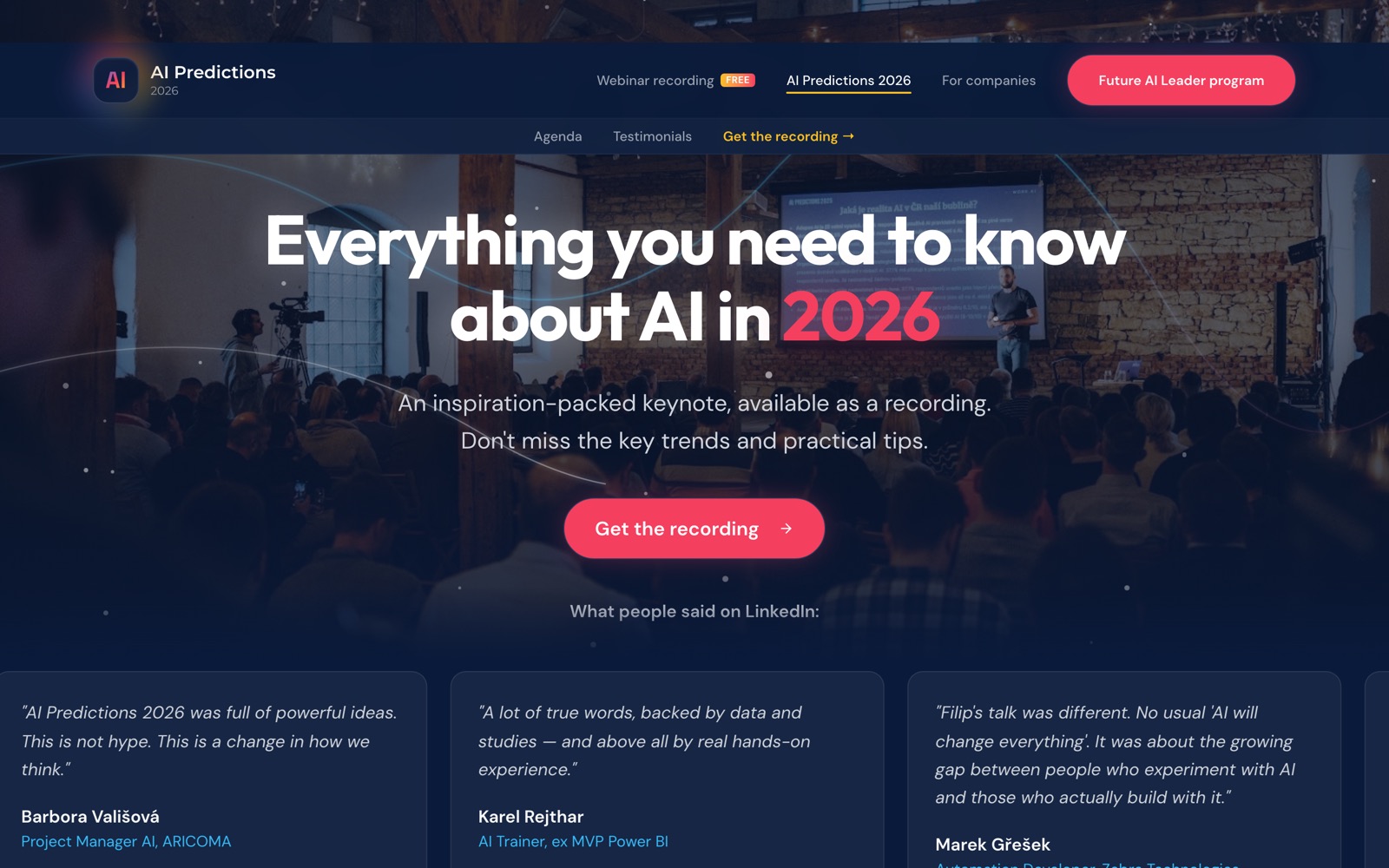
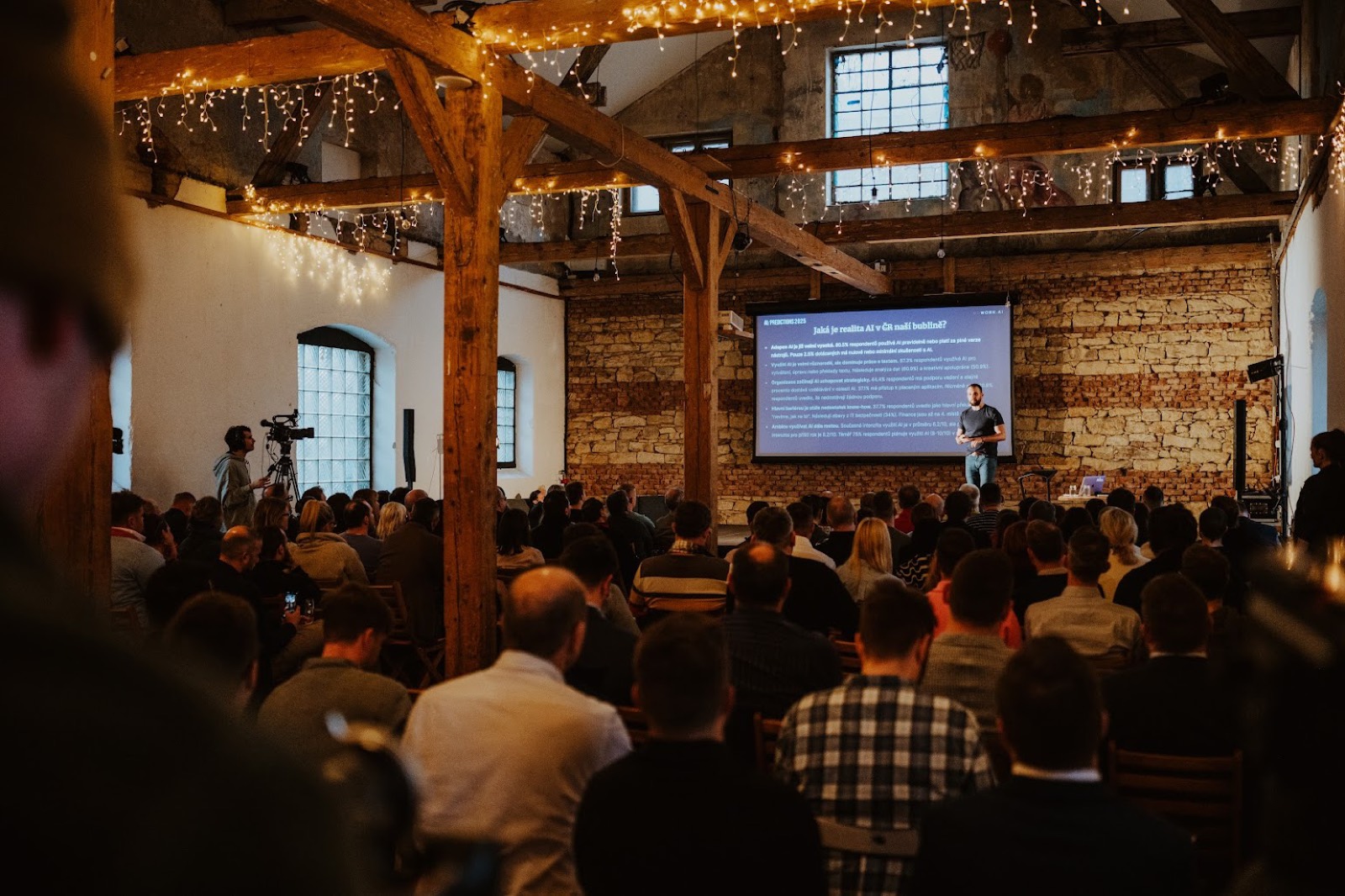
My annual national AI event — the complete production, in natural language.
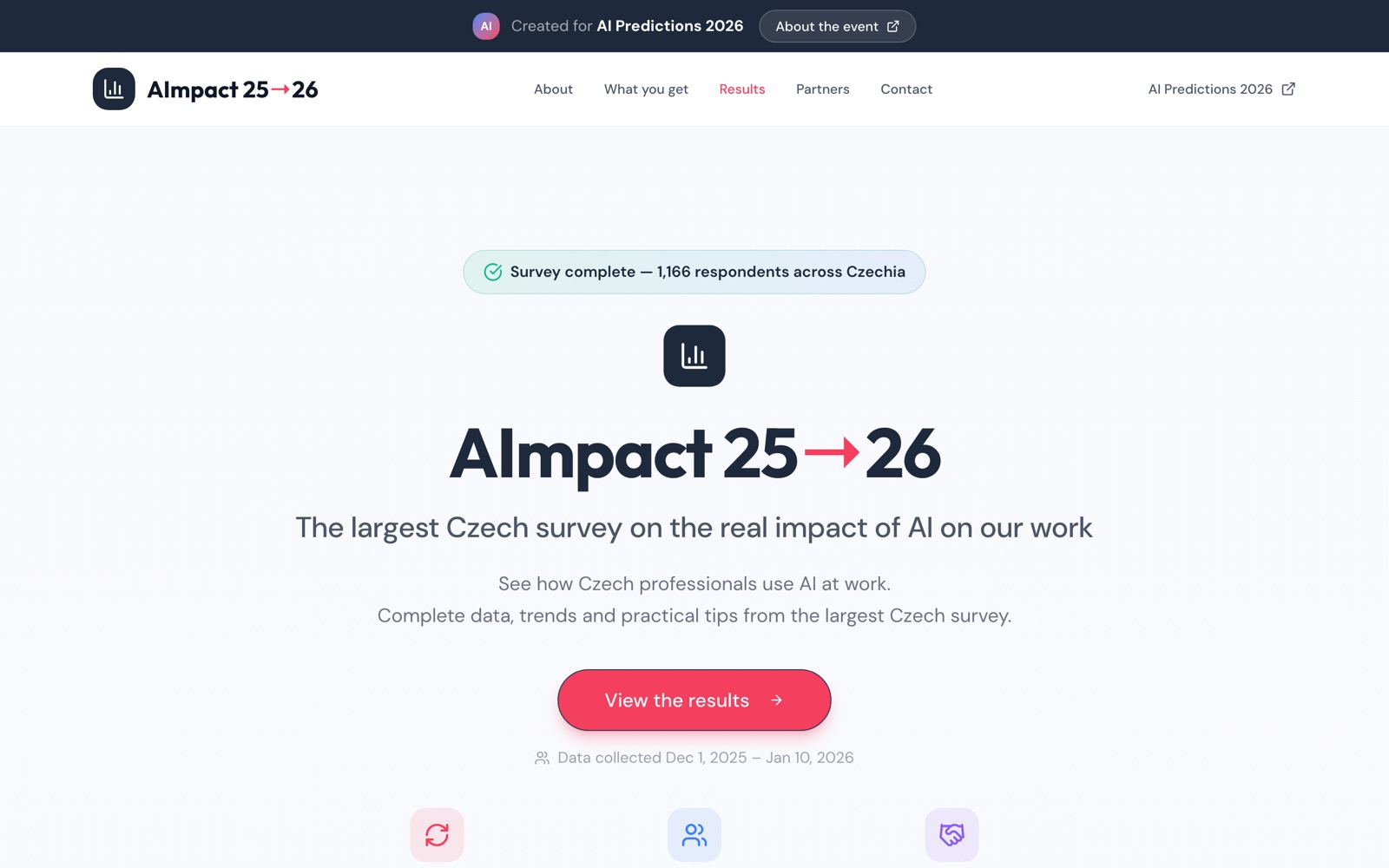
The largest Czech survey on AI at work — published exclusively in WIRED.
Future AI Leader (FAIL) — a 10-week, 10-module intensive I've run twice a year since 2021, on the adaptive learning platform from section 02. Cohorts grew 16× on under $3,000 of paid ads per run — the demand is the curriculum, not the marketing. And yes, the acronym is deliberate: with AI you don't need 10,000 hours, you need 10,000 iterations — every fail is a First Attempt In Learning. ;)

Participants don't talk about tips — they talk about a changed way of working: their own agents, systems and second brains, carried into their companies. In their words:
FAIL is a brutal course. It shouldn't even be listed as an online course — it's something else entirely. Tailored to you to the point you'd swear Filip hacked your computer and read all your files. Your life will split into before FAIL and after FAIL.
In my entire 25-year career, FAIL was without question one of the best trainings I've ever taken. The portal, the collective intelligence, the personalized advice — in that respect FAIL has no competition.
Before FAIL I used AI daily, but I lacked a system. During the program I built AI_OS — a company operating system with 19 AI agents, workflows and a knowledge base we now use every day in delivery and sales. Essentially a second brain for the whole company.
I came into FAIL as a creative with good tools. I'm leaving with a clear strategy for turning it into a scalable business. And Filip recommended Claude — one of the best tips of the whole course.
FAIL was the best investment of this year. I turned practically all of my pilot projects into paid client work — the investment will pay back many times over. The biggest value: systematically building a knowledge base.
FAIL is not a course where you sit and listen. From the first lesson something starts happening — in your head, in your tools, in the way you think about your own work.
FAIL 2026 became the starting point of AI development at Packeta.
In 10 weeks FAIL took me further than I would have gotten in months, maybe a year, of trial and error on my own.
This program completely changes how you look at the way you do your work. The difference between before FAIL and after FAIL is enormous.
A genuinely breakthrough experience. I'd worked with AI before, but this program truly opened my eyes — and I looked forward to every single session.
The most practical and inspiring approach to adopting AI I've tried so far.
Excellent for advanced AI users and complete beginners alike. Filip pulls you in with a hugely interactive, effective format.
At the start I didn't believe a course could move me this far. My work with AI finally has a system — I've stopped using AI like Wikipedia and started using it as a full assistant.
FAIL opened my eyes — and the productivity boost is real. Things that used to take me hours I now automate with a snap of my fingers, everything documented in a second brain my colleagues can use too.
I'm taking away concrete tools I use every day — not theory. In 10 weeks I went from "playing around with AI" to 22 specialized agents and a structured knowledge base.
I'm a tennis coach, and I came in already building apps and automations for my club, thinking I knew what I was doing. The program showed me how scattered it all was — and gave me a system, a way of thinking, and a clear vision of where it's heading.
I came in as a project manager who "sort of uses AI." I'm leaving building my own tools — vibe-coding mini-apps and websites tailored exactly to what I need.
I wasn't a beginner — I built agents, ran analyses, tried automations. The program still gave me the thing I was missing: structure. I stopped building things at random and started building a system.
I thought I'd walk away with tips for new tools. I walked away with something much better: a completely different mindset. I don't use a single new tool — but with the ones I have, I do far more, far better.
FAIL delivered exactly what it promised — and that's not a given. The materials clearly evolve in real time, and every module shipped something concrete: prompts, scripts, playbooks, files. Not inspiration for a drawer — tools.
Only one thing about FAIL bothers me — that I waited for this cohort instead of joining the previous one. Why struggle through trial and error when you don't have to?
I started as the skeptical eternal beginner who keeps hearing what AI can supposedly do. Five weeks in, I was building things I wouldn't have believed were possible.
It completely opened my eyes — my productivity feels like it's up 200%. Everything is a prompt, and my work will never look like it did before FAIL.
I came in as an advanced AI user and still kept discovering directions I'd never thought of. The weekly personalized recommendations were a highlight.
I started as a complete beginner who didn't know where to begin. As co-owner of a small company I needed something practical: we launched our first automations, built a company knowledge base, and I prepared AI training for my team.
No theoretical sauce — pure practice. FAIL forced me to stop just reading about AI and actually try it, think with it, and leave with a vision for adopting it across our company.
The personalization of the whole program sets the bar for how this should be done — in the content itself and in how you get to consume it.
Your program website was so good I copied it — and built three more sites on its design.
The best AI course I've taken so far. Not just tools and prompts — a way of thinking about AI, data, automation and real-world use. After 10 weeks the shift is huge.
I recommend FAIL to anyone who needs the push to finally think AI-first — and to know where to reach no matter what they're solving. The more time you give it, the more it gives back.
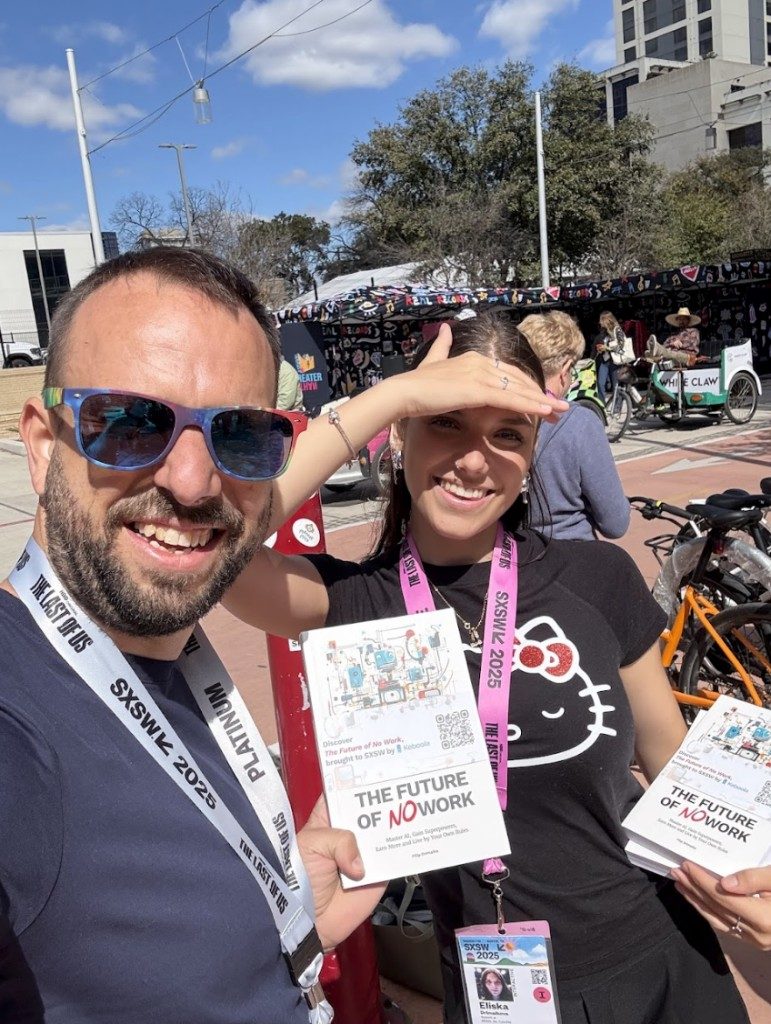
First the book. Then, refined on thousands of assessments, the method.

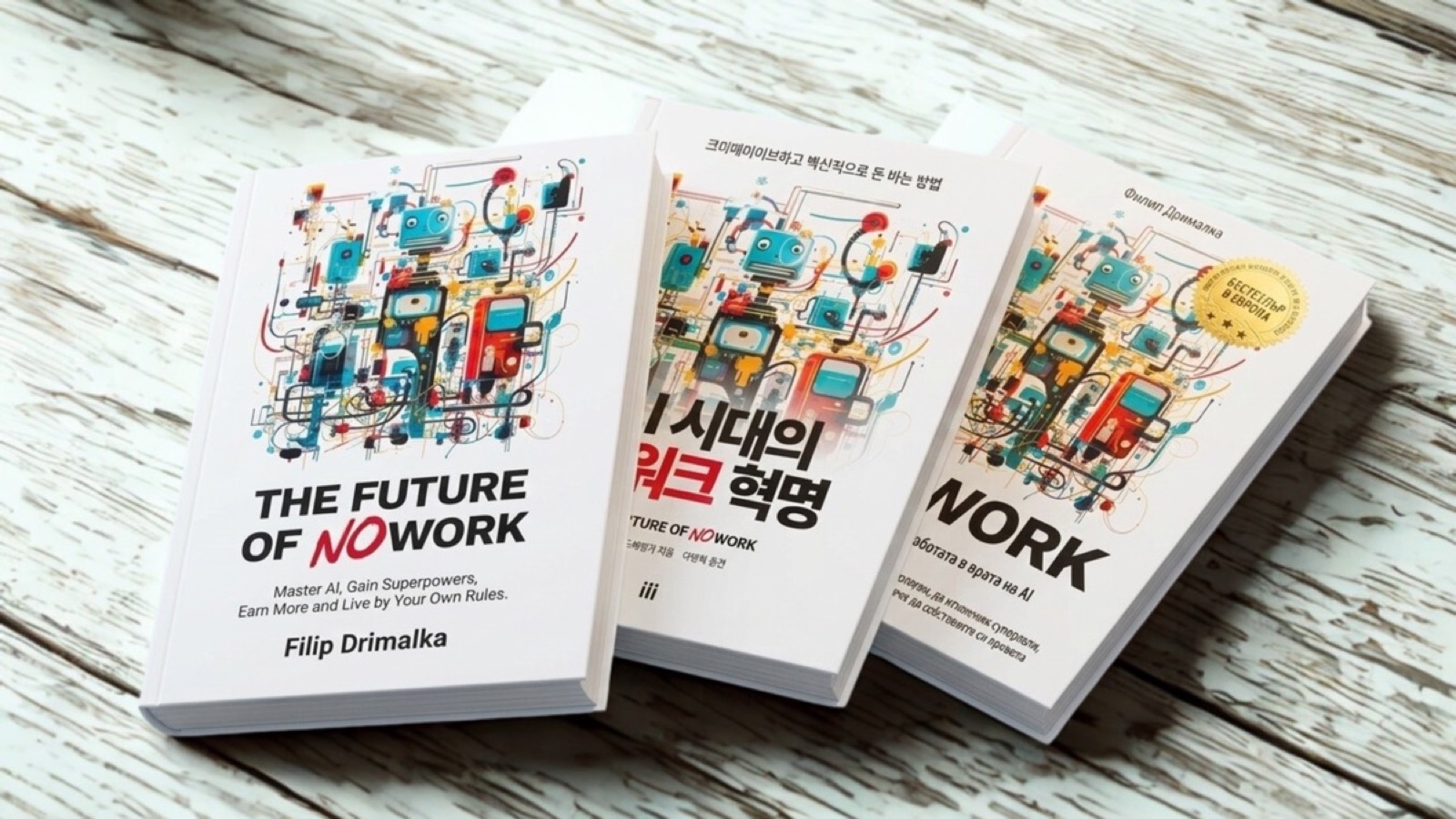
50,000+ copies in 6 languages. Its core idea: we don't go to work to be at work — we go to build systems that work for us.
Years of teaching later, that idea became Superpowered Professional™ — my method for how to think, work and lead with AI.

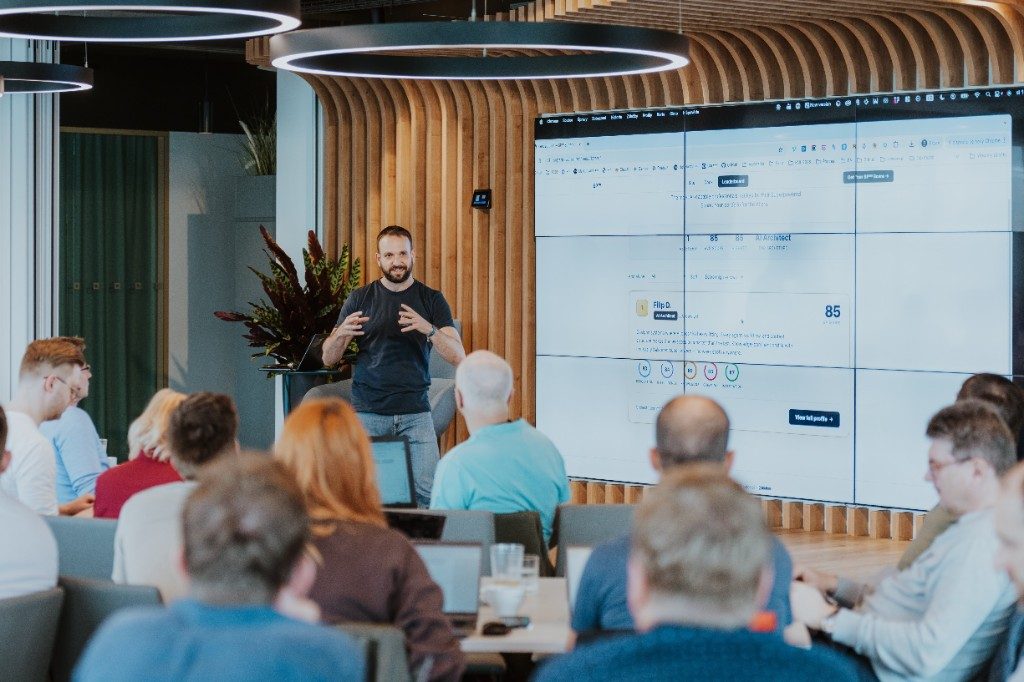
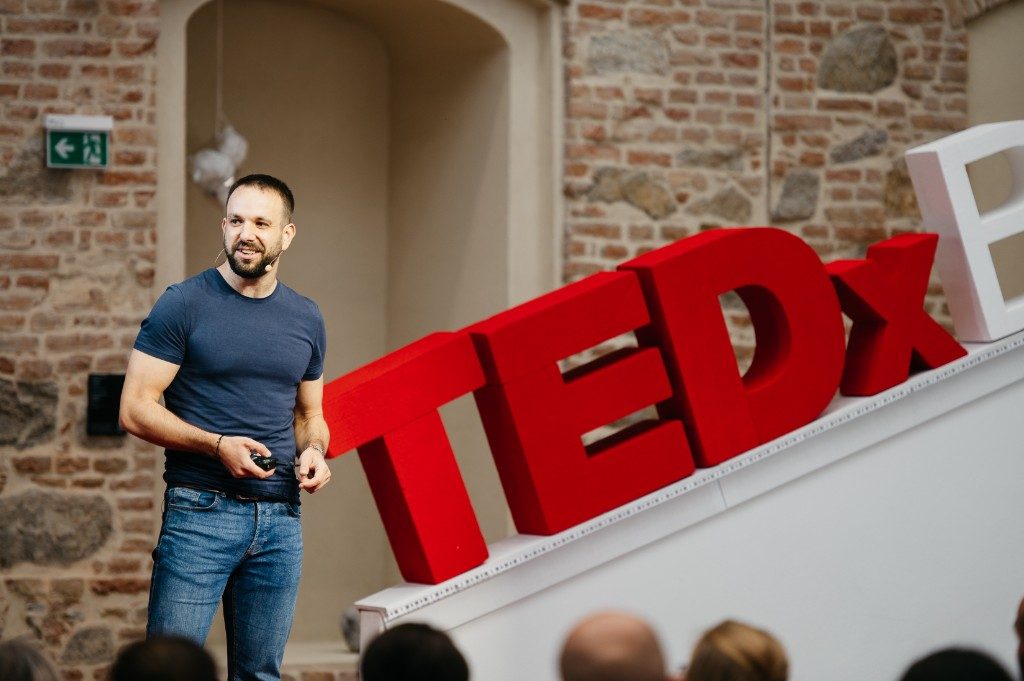
939 client engagements across 252 companies in the past three years — ~2,000 hours on stage and in the room, four continents, for brands from Škoda Auto and Microsoft to Mondelez. All straight from my calendar.


We invited Filip to our European Strategy & Transformation team meeting. His contribution exceeded all expectations — for most participants it was a significant "aha" moment. The fact that Filip was the highest-rated speaker speaks volumes.
For the topic of AI, there was no one we'd rather invite than Filip Drimalka. The challenge was to frame the talk so that its expert depth and complexity would land with a broad audience — from beginners to AI pros across all the companies involved. He nailed it.
Filip's presentation at the conference for the management team of Volkswagen Slovakia was perceived very positively and successfully sparked participants' interest. As a result, multiple parties within the organization are asking about deepening the cooperation.
Filip's workshop helped us look at AI not as a collection of tools, but as something already reshaping how we work, collaborate and lead. I would genuinely recommend it to any organization that wants to move the AI conversation from tools to real changes in the way people work.
This is a public preview. The full presentation and transcript are hidden. If you'd like to see the complete presentation, get in touch with us.
I've spent the last few years doing one thing: closing the gap between what AI can do and what people actually know how to do with it. I wrote a book about it that sold 50,000+ copies and got translated into six languages. I built a leadership program that ~2,000 professionals have taken over six years, growing to 550+ in a single cohort. And I produced most of it with Claude — hands-on, every single day.
So when I read this role, it didn't feel like a job description. It felt like the thing I already do, at the scale I've been trying to reach on my own.
Here's why Anthropic specifically. I've tested every model on real teaching work, in front of real people who pay to learn. Claude is the one I trust with a learner's time. It admits what it doesn't know, it writes explanations I don't have to gut and rewrite, and I can hand it a quality bar and it holds. When your product is teaching, that reliability is the whole game.
And this isn't a recent conversion. I've admired this company loudly, for years — I listen to every interview Dario Amodei gives, and Anthropic's research runs through my keynotes and programs. It goes beyond talking: I've convinced leadership teams at major companies to roll out Claude, including banks and major European e-commerce players. Where my own money goes, this page already shows.
The mission lines up with what I actually think is happening. The gap between people who use AI well and everyone else widens every month — I've watched it in the data from my own program. Education is how you close it before it hardens into something permanent, and Anthropic is one of the few places serious about doing that at the source.
I also come at this as a business builder, not only an educator. I founded two companies — sold the first, an e-learning platform that grew to 100,000 registered users, and sold a majority of the second. I've hired, attracted talent, led teams, and owned a P&L. Education at this scale is a craft and a business at once, and I've run both.
I'm ready to leave a comfortable position and a strong brand in Europe for this. I'm financially secure, so the pull is the problem itself: the most interesting one I can imagine working on. I've built the small version of this. I'd like to build the real one, with you.

A decade of building education companies — exited Digiskills, sold a majority of Aibility (now run by two co-CEOs). Back to building closest to the learner.
Relocating to SF or NYC · visa sponsorship needed · start ~6–8 weeks after an offer, remote onboarding immediately.
AI Personality of the Year 2025 (Czech AI Association) · LIGS Award 2017 for innovation in adult education.
Board member of Digivia — 10,000+ nonprofits digitalized, €50M+ saved. And every January, AI Predictions proceeds go to nonprofits building future skills — Czechitas, Matika Česku, Česko.Digital.